Start With a Theme
A lot of playgrounds have themes on paper that never quite materialize in the real world. The equipment has a pirate ship motif, but the surrounding surface is plain black rubber, the benches are standard park issue, and the signage doesn’t match any of it. The result feels disconnected.
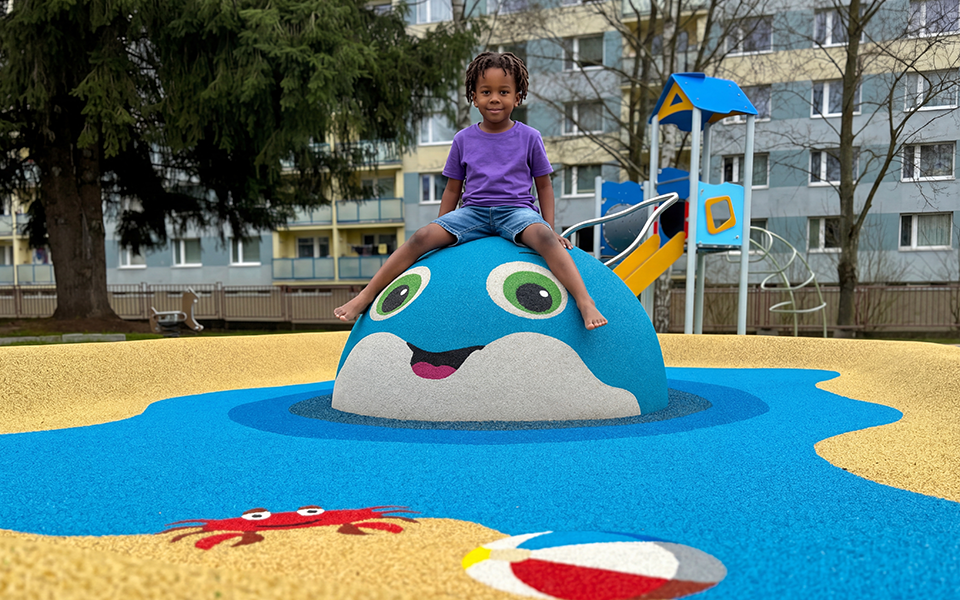
A strong theme is one that carries through every element of the space. When the surfacing, structures, colors, and graphics all speak the same visual language, kids feel it even if they can’t articulate why. They’re just in it.
Some themes that translate particularly well to immersive playground environments:
- Nature and wilderness adventure: forests, rivers, wildlife
- Ocean and underwater worlds: waves, sea creatures, coral patterns
- Space and science exploration: galaxies, planets, star maps
- Transportation and cityscapes: roads, runways, cityscapes
- STEM and educational themes: numbers, letters, geographic features
- Storybook and character-based environments
The theme should inform every purchase decision and design choice from the beginning, not get layered on at the end.
Use the Surface as a Design Tool, Not an Afterthought
Here’s where a lot of playground projects leave value on the table: they spec the equipment, plan the layout, and then treat the surfacing as a compliance checkbox. But the surface covers more square footage than anything else on the playground. It’s the most visible element in the entire space.
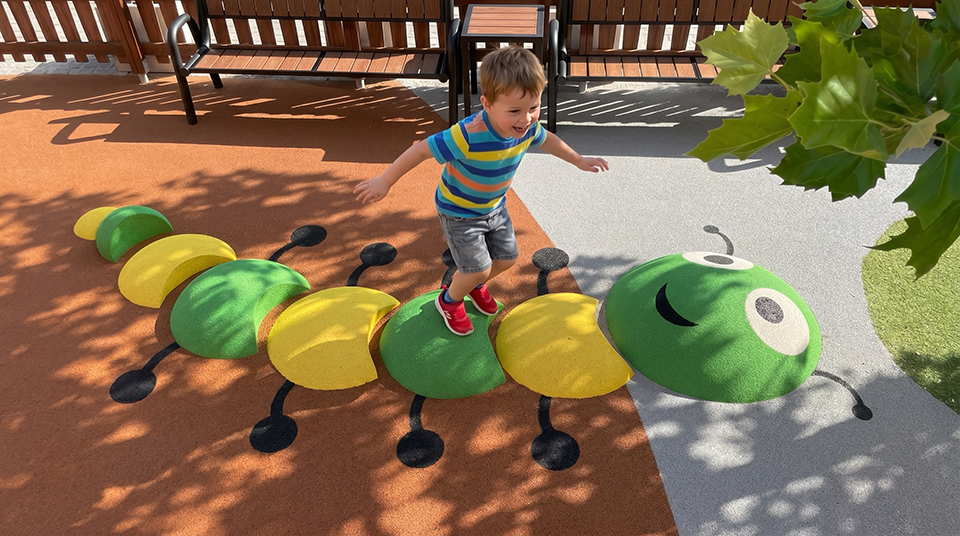
RubberBond’s poured-in-place surfacing system turns that square footage into a creative asset. With unlimited color combinations, custom graphics, curved lines, and seamless transitions, the surface can carry the theme as effectively as any piece of equipment.
Think river pathways weaving through a nature-themed playground. Star field patterns radiating outward from a space-themed climbing structure. A hopscotch trail that doubles as a learning tool and a visual connector between zones. These aren’t extras, they’re what transforms a functional playground into a place kids remember.
Think in Zones, Design for Flow
Immersive playgrounds work best when they offer variety: different types of play, different levels of energy, different experiences that kids can move between throughout a visit. Designing intentional zones gives the playground structure without making it feel rigid.
Zones to consider:
- Active play areas: climbers, slides, spinners, swings
- Sensory experiences: textures, colors, interactive sound features
- Imaginative and social spaces: themed structures, quiet corners, seating
- Inclusive play areas that accommodate children of all abilities
The surfacing can define these zones visually without the need for physical barriers. A shift in color palette or pattern naturally signals a transition from one zone to another, keeping the overall space feeling cohesive while still offering variety.
Be Strategic About Color
Color does a lot of work in a playground environment, and the choices you make have a real impact on how kids use the space. Bold, high-energy colors in active zones encourage movement. Softer tones in quiet areas create a sense of calm. Contrasting colors in pathways guide movement naturally without signage.
RubberBond’s EPDM color library gives designers a wide range of options and the flexibility to mix, blend, and layer colors in ways that serve the design intent. UV-stable pigmentation means those colors stay vibrant through years of sun exposure and heavy use, which matters when the visual impact of the playground is a core part of its appeal.
Design for Every Child
An immersive playground that only works for some children isn’t fully immersive. It’s exclusive. True inclusion means designing surfacing and layouts that welcome children of all abilities from the start.
RubberBond’s smooth, slip-resistant poured-in-place surface supports ADA-compliant access routes and transitions. High-contrast color choices can provide visual cues for children with sensory needs. Tactile surface elements can create interactive experiences for kids who engage differently with their environment. When inclusion is built in rather than bolted on, the playground is richer for every child who uses it.
Build for the Long Run
An immersive playground is only as good as its condition two, five, or ten years down the road. RubberBond’s EPDM-based system is engineered to maintain its appearance and safety performance through heavy daily use and the full range of North American weather conditions.
When the surface holds up, the design holds up. The investment in creating something visually compelling pays off for years rather than fading, cracking, or separating after a couple of seasons.
Bring the Vision Together
The difference between a playground that’s functional and one that’s genuinely memorable often comes down to how intentionally the design was integrated across every element of the space. Theme, color, graphics, zones, accessibility, and surface materials when all of these are considered together from the beginning, the result is a play environment that truly draws kids in. RubberBond Solutions is ready to help make that vision real. Reach out to our team to talk through your project.